Most of what makes the tour work is on us: the van, the trailer, the food and the route. But a little preparation on your side makes four days on the parkway a lot more comfortable. Here’s what I tell riders before they come.
Your bike or ours
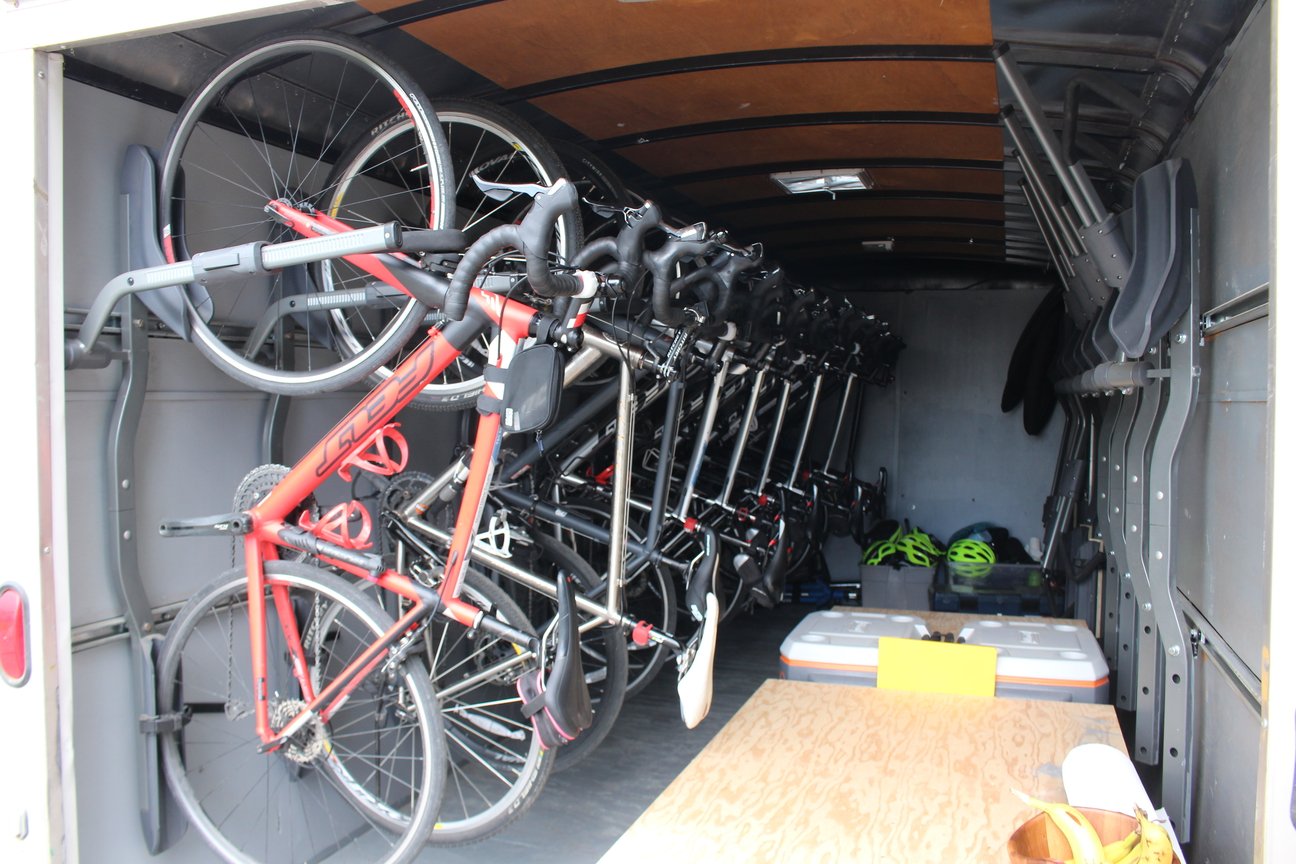
About half our riders bring their own bike. It travels to Jasper and back inside our enclosed trailer, so there’s no roof rack and nothing to take apart for the drive from Edmonton.
What kind of bike?
The route is paved all the way, so a road bike, or a gravel bike with slick tires, is the most efficient choice. Drop handlebars help: they give you several hand positions, which matters when you’re on the bike for hours, and they help you ride efficiently. A performance hybrid can do the job, but you’ll only have one position to ride in. I wouldn’t recommend a mountain bike.
Gearing for the climbs
You’ll want a wide range of gears. Most climbs on the route are gradual, at 4 to 5 percent, but there are two passes near 2,000 m. Many road bikes come with a 50/34 crankset, which is already a fairly wide range. If hills worry you, ask your local shop about lower gearing. It can mean changing the derailleur or even the shifters as well as the cassette, so do it well before the tour.
For comparison, our rental gravel bikes run a single 38-tooth chainring with an 11 to 44 cassette, which gives a very low climbing gear.
What to carry on your bike
- Two bottle cages and two water bottles
- A pump
- A seat bag with two spare tubes, tire levers and a patch kit or CO2 inflator
- A red rear flashing light, and a front light if you have one
- Optional: a bike computer or GPS
Our trailer carries basic spare parts and tools, and I’m happy to do whatever repairs I can on tour. But I can’t carry every specialist part or tool, so if you’re bringing your own bike, take it to your local shop for a thorough check before you come.
Renting one of ours
If you’d rather travel light, rent one of our bikes for the tour. You add it when you book, and either bike costs $220 for the four days.
- The gravel bike: Brodie Romax Carbon 2.0 Apex gravel bike, slick tires (carbon, 9.4 kg; SRAM Apex 12-speed; riders 4 ft 10 to 6 ft 2).
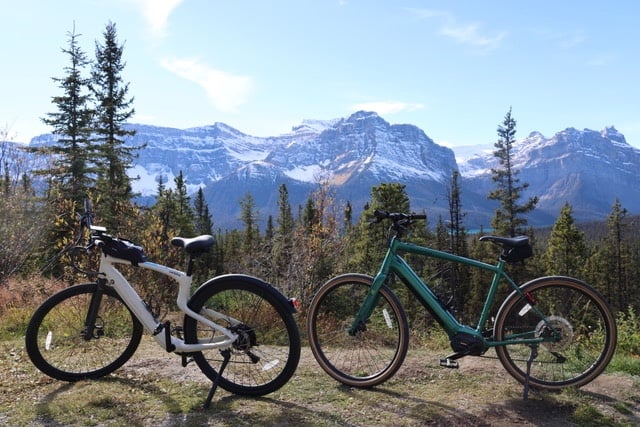
- The e-bike: electric pedal assist, runs silently, and it takes the sting out of the hills.
Every rental comes with a spare tube, tire levers, CO2 inflator, pump, seat bag, flat pedals and two bottle cages. Helmets are available to rent. Bring your own clip-in pedals and shoes and we will fit them at pickup. If you have a favourite saddle, bring that too and we’ll put it on.
Renting also saves you flying with a bike: no bike box, no trusting your pride and joy to the airline, and no taking it apart and putting it back together. And if you’re sightseeing before or after the tour, you won’t have a bike to drag along. At the end, hand it back to us and carry on.
Get your bike checked
Get your bike tuned up at a shop you trust. If you’re changing anything, like a saddle, tires or gearing, do it a month or two before the tour so you have time to get used to it and sort out any problems.
What to look at
- Comfort. On your next long ride, notice your contact points: saddle, hands and feet. If something hurts, adjust it. If it still hurts, try a different saddle, grips or pedals. Other riders and bike shop staff are good for recommendations.
- Shifting. It should be smooth and quiet.
- Brakes. You should trust them to stop you in all conditions. If you have any doubts, have a shop check the cables and pads.
- Tires. Puncture-resistant tires are a must. They’re a little heavier and roll a little slower, and that’s a trade worth making.
- Fenders. Worth considering if you’d rather not wear the road spray on a rainy day.
Three things you can do yourself
- Tire pressure. Pump your tires to the full recommended pressure and keep an eye on it during the tour. Even a 10 psi drop affects tire wear, how hard you work and your chance of a flat.
- Chain lube. Check it monthly. Lube it partway through the tour if you’ve ridden in the wet, or if the chain looks dry or sounds noisy.
- Brakes. Cables stretch, pads wear and springs drift out of adjustment. Rim brakes are fairly simple to adjust; disc brakes may need a mechanic. If you’re not sure, ask your shop whether you should adjust your own.
If you can make adjustments yourself, carry the right Allen keys and a small screwdriver in your seat bag. And keep your bike clean. It’s the easiest way to make it last, and to spot a problem before it catches you out on the road.
Safety on tour
Safety is our top priority. The van stays close all day, leapfrogging between groups of riders and waiting at pull-outs ahead of you. Every rider carries a two-way radio, so if you’d like a lift at any point, call the van. There’s no cell service between Jasper and Lake Louise, so the van also carries a satellite communicator for emergencies, and our guides are first-aid trained and carry an AED.
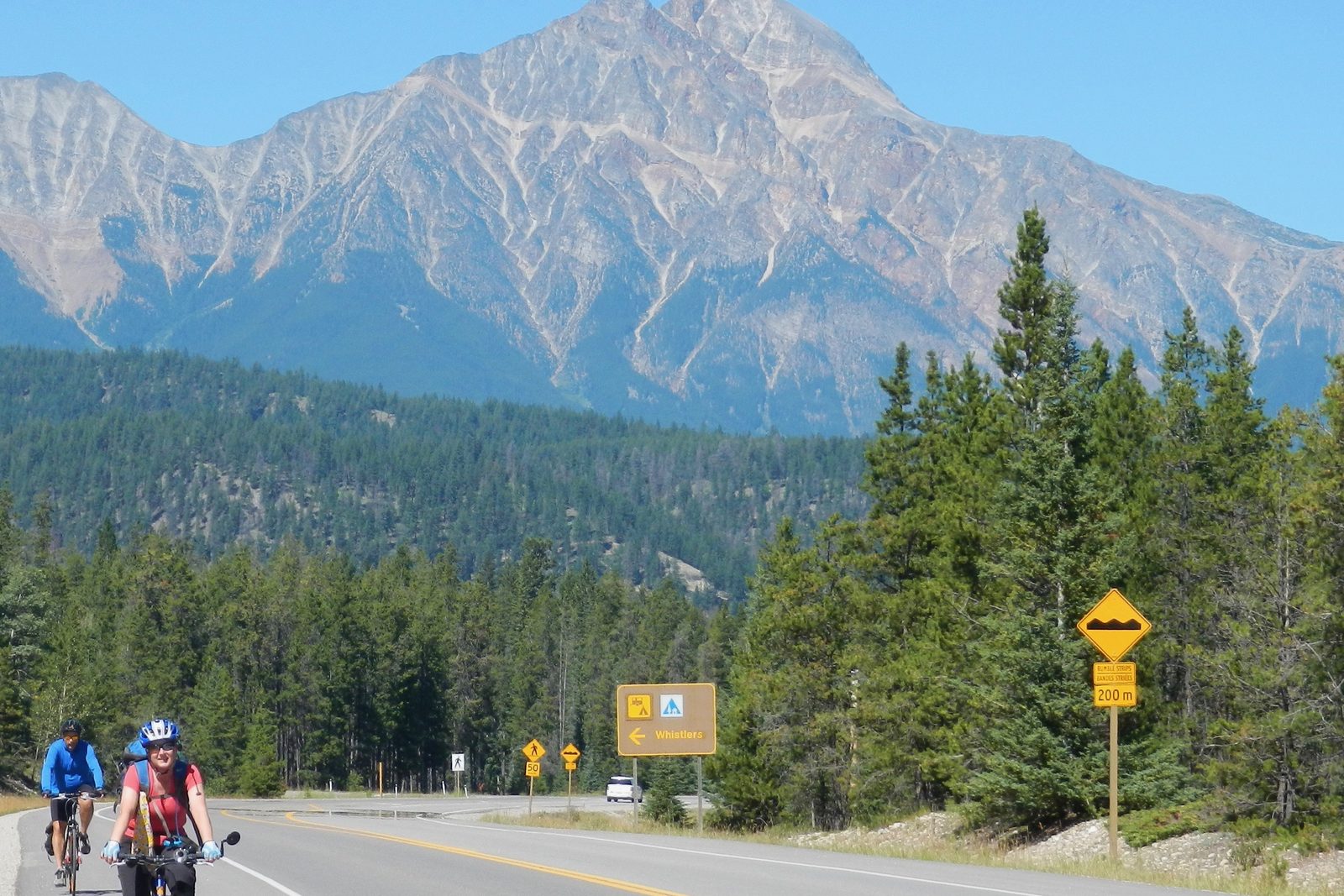
There’s a good shoulder along about 90 percent of the route. Where it narrows, ride single file. Where you can, ride in the middle or on the right side of the shoulder, to keep as much space as possible between you and the traffic you’re sharing the road with.
Cars often stop for wildlife, sometimes on both sides of the road. Slow down, move out carefully and watch for doors opening and drivers pulling back onto the road. Parks Canada asks everyone to stay at least 30 m from elk and sheep and 100 m from bears, so admire them as you ride by rather than stopping beside one.
Fit your helmet properly
A helmet should fit snugly, like a baseball cap. It shouldn’t feel tight or press anywhere, but it shouldn’t feel loose either, with a lot of space between the helmet and your head.
- Position the side clips just below your ears, so the straps meet in a V. This levels the helmet so it protects the front and back of your head.
- Adjust the chin strap so about two fingers fit between your chin and the strap.
A well-fitted helmet sits level, about an inch above your eyebrows. Check it: if you can fit more than two fingers between the helmet and your brow, it isn’t sitting right, so adjust the straps again. If it still wobbles, you may need a different size or style.
We recommend a helmet with MIPS, a liner designed to slip slightly on impact to help reduce the chance of a concussion in a crash. Whatever helmet you choose, the fit matters most. Even the best helmet does little good if it isn’t worn properly.
Be seen
Bright colours help drivers see you. Fluorescent red, yellow and orange are the most visible, and reflective strips help in dim light. Use a flashing rear light, and a front light too in fog or on dull, cloudy days. Rechargeable lights stay brightest. If you don’t own bright cycling clothes, a cheap high-visibility vest over your jacket does the job.
What to wear
Weather in the Rockies can change a lot from day to day, and rain in the valleys can mean snow or sleet on the passes. On a sunny afternoon, the rock walls can trap the heat in the valleys. So bring layers.
- Jerseys. Breathable, moisture-wicking fabric, ideally with back pockets for the small things you want close at hand.
- Shorts. Padded cycling shorts are the most comfortable. If Lycra isn’t your style, go for mountain bike or commuter shorts, or a cycling skort. You can also wear padded liner shorts under your favourite athletic shorts.
- A jacket. A wind and rain proof cycling jacket, roomy enough to wear over a fleece but not so loose it fills with air and billows in the wind. Look for good vents and zipped pockets.
- Arm and leg warmers. They pack small and take the chill off cold mornings. A light fleece works too, on its own or under your jacket.
- Gloves. Padded fingerless gloves for warm days, and lightly insulated, water-repellent gloves for cold, wet mornings.
- Sunglasses. Dark enough for the glare off snow and glacier ice, plus clear or yellow lenses for dull days and bugs.
- Nice to have. Waterproof shoe covers, a very light wind jacket, a warmer fleece and merino socks.
For the evenings, pack casual clothes, and shorts for the hot tub. The full packing list, and what the tour price covers, is on the tour page.
Should you ride an e-bike?
The distance and the climbs between Jasper and Banff can look daunting. There’s still a bit of a stigma about e-bikes in some cycling circles, but for some people I think they’re the most awesome thing ever. Here are three reasons why.
1. You want to ride with your partner
Your partner is keen to do the tour and would love you to come, but you know you ride at different speeds. An e-bike is a fantastic equalizer. Your partner rides at their usual pace on a regular bike, and you’re right beside them, experiencing the Rockies at the right pace together.
2. The distance looks like a lot
You’re comfortable riding a certain distance, but a 98 km day, a few long days in a row and some climbs thrown in seem like too much. On an e-bike you choose how much the motor adds to your own pedalling, so you can pedal more on the flatter sections, flatten out the climbs and ride further in a day than you could on your own.
3. An old injury holds you back
You’re active, fit and strong, but a past injury or health concern limits you. I saw this first hand with my dad, who was 67 when he came over from Australia for a custom nine-day Jasper to Banff tour in 2016. He was amazingly active, cycling, walking, kayaking or playing tennis, table tennis or golf almost every day since he retired. All that activity had left him with creaky knees. He was fit enough to pedal all day, but the extra strain on his knees would have ended the tour for him far too early. By switching between a regular bike and the e-bike at different points, he rode the whole distance and kept up with everyone.
I believe every person we can get out of a car or bus and onto a bike to experience nature at the right pace is a win. You never know: the e-bike might be the start of a change for the better, and next time you’ll be on a regular bike.
Our rental e-bikes are pedal-assist and run silently, and like the gravel bike, one costs $220 for the four-day tour. The models change from time to time, so call or text 780-885-9813 if you’d like to know what we’re riding this season.
Jasper to Banff, fully supported
Ride it with us
Four days from Jasper to Banff with hotels, meals, park fees and the van never far away. From $2,697 per person, twin share.